Unlock your business’s potential with MRB Media’s expert SEO-driven marketing and web design strategies. Book a consultation to start your journey to online success today!
Follow Us Anywhere!
©2024 MRB Media, Inc. | All rights reserved.


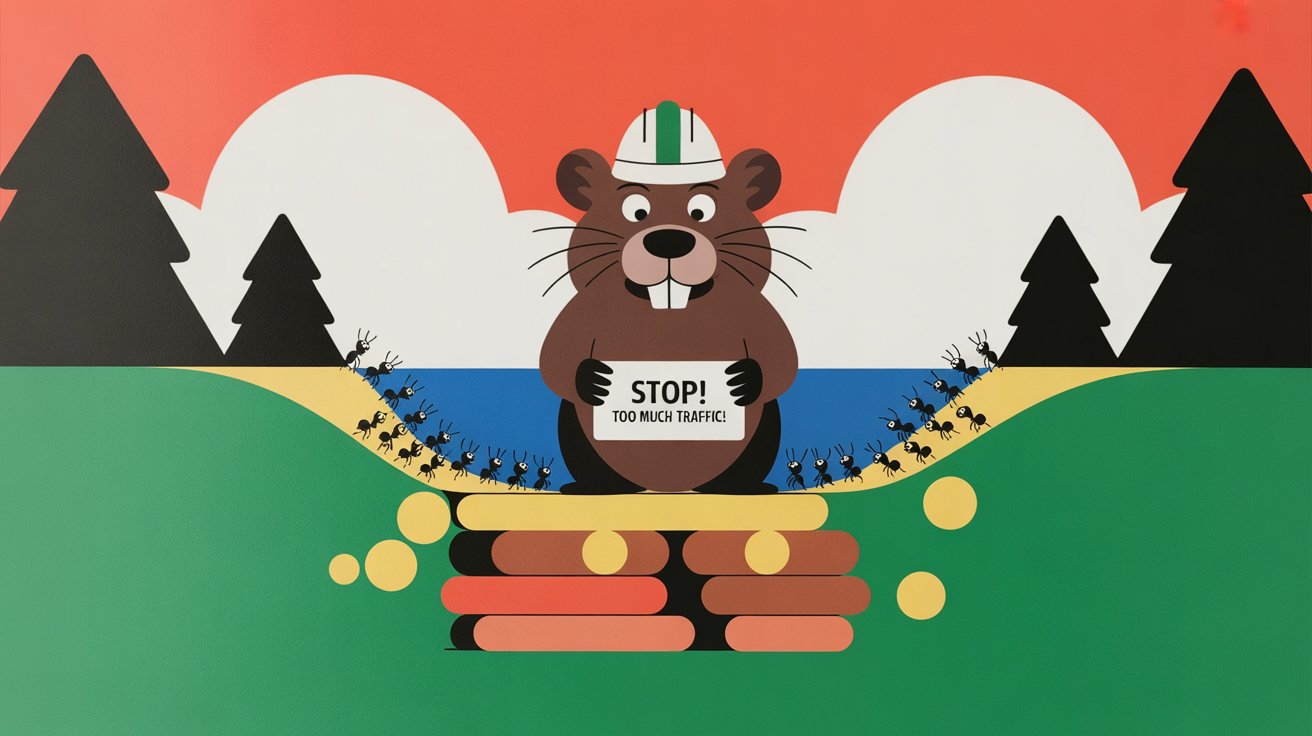
IIt is one of the most common goals in digital marketing: increase website visits, drive more clicks, launch more campaigns, expand reach. On the surface, the logic feels obvious. More visitors should mean more leads, more sales, and more momentum.
But this assumption is often wrong.
One of the most overlooked secrets to improve your website visits is understanding that traffic alone is not a growth strategy. Traffic is amplification. It magnifies whatever already exists.
If your website is clear, trustworthy, and easy to navigate, more traffic can accelerate results. If your website is confusing, slow, or misaligned with user expectations, more traffic can accelerate losses.
This is where many businesses make an expensive mistake. They treat traffic as the solution instead of evaluating whether their system is ready to convert the attention they are buying.
Understanding the leaky bucket metaphor, ad spend efficiency, reputation risk, and the signal-versus-noise problem reveals why more traffic can sometimes make things worse.
Imagine trying to fill a bucket with water.
If the bucket is solid, adding more water works. The level rises. You retain what you pour in.
Now imagine the bucket has holes.
No matter how much water you add, it leaks out. Pouring faster may temporarily make the bucket look fuller, but the underlying problem remains. Eventually, the waste becomes obvious.
Your website works the same way.
Traffic is the water. UX and UI issues are the holes.
These holes can include:
Slow loading speed
Confusing navigation
Weak calls to action
Poor mobile experience
Broken trust signals
Unclear messaging
Each issue creates friction. Friction causes drop-off. Drop-off wastes traffic.
One of the biggest secrets to improve your website visits is recognizing that traffic should only be scaled once the experience is optimized.
More traffic without fixing friction is not growth. It is more efficient waste.
Clear messaging
Fast load speed
Strong CTA
Higher retention
Slow pages
Confusing UX
Poor trust signals
High bounce rates
More traffic amplifies the performance of your existing website experience—for better or worse.
Traffic is not free.
Whether through ads, SEO, partnerships, or content, every visitor has an acquisition cost. Even organic traffic has hidden costs through time, labor, and infrastructure.
This makes conversion rate critical.
Customer Acquisition Cost (CAC) is determined by how much you spend to acquire a customer. When your conversion rate is low, CAC rises.
For example, if you spend money driving 1,000 visitors but only a few convert, your cost per customer becomes expensive quickly.
Low conversion rates turn traffic into a liability.
This is where businesses often misread performance. They focus on traffic volume instead of cost efficiency.
One of the most important secrets to improve your website visits is shifting focus from traffic quantity to conversion quality.
A website with a 1 percent conversion rate and high traffic may perform worse financially than a site with lower traffic but a 5 percent conversion rate.
More traffic should improve efficiency. If it worsens CAC, the system is broken.
Ad campaigns create expectations.
A user clicks because the message promised something. The landing page must fulfill that promise immediately.
When the page is unclear, slow, or overwhelming, trust drops.
This creates a mismatch between expectation and experience.
The result is wasted spend.
Businesses often respond by increasing budgets, testing more ads, or widening audiences. But if the website experience is the issue, these actions only scale inefficiency.
Fixing the website first increases return on every future traffic source.
More traffic does not just increase opportunities. It increases exposure.
This means every flaw becomes more visible.
A poor first impression with a handful of visitors is manageable. A poor first impression with thousands becomes a reputation problem.
Visitors form impressions quickly.
If the site feels outdated, confusing, untrustworthy, or difficult to use, they do not simply leave. They associate that experience with your brand.
Brand trust is cumulative. Every interaction either reinforces or weakens it.
One of the hidden secrets to improve your website visits is protecting the quality of those visits.
Scaling traffic before improving experience can create long-term damage.
This includes:
Negative word of mouth
Reduced repeat visits
Lower brand recall
Decreased trust in future campaigns
Traffic amplifies brand experience. If the experience is weak, scaling accelerates damage.
More traffic creates more data.
But more data is not always more clarity.
Low-quality or low-intent traffic can distort performance signals. It creates noise that makes it harder to identify what is actually working.
For example:
High bounce traffic may lower average engagement metrics
Irrelevant visitors may skew heatmaps and behavior tracking
Low-intent clicks may reduce conversion clarity
This creates false conclusions.
A business may think a headline is failing when the real issue is audience quality. They may think users dislike a feature when the real issue is misaligned traffic.
One of the most practical secrets to improve your website visits is ensuring traffic quality before traffic scale.
Good decisions depend on clean signals.
Bad traffic creates misleading data. Misleading data creates poor strategy.
| Traffic Type | Behavior Signal | Business Impact |
|---|---|---|
| High Intent / Qualified | Clear user behavior patterns | Better optimization decisions |
| Low Intent / Broad Traffic | Noisy and misleading data | Poor strategic decisions |
Before increasing traffic, your website should answer key questions clearly:
Can visitors understand what you offer quickly
Is the site fast and mobile-friendly
Are trust signals visible
Is there one clear primary action
Are conversion paths simple
Traffic should amplify a system that already works.
This does not mean perfection. It means readiness.
A website that converts consistently at lower volume is a better candidate for scaling than one that struggles under light traffic.
The highest-leverage improvements often come from fixing friction rather than increasing reach.
Areas to prioritize include:
Homepage clarity
Landing page alignment
Page speed
CTA visibility
Trust elements such as reviews and policies
Form simplicity
These improvements increase efficiency before scale.
This makes every future click more valuable.
The highest-leverage improvements often come from fixing friction rather than increasing reach.
Areas to prioritize include:
Homepage clarity
Landing page alignment
Page speed
CTA visibility
Trust elements such as reviews and policies
Form simplicity
These improvements increase efficiency before scale.
This makes every future click more valuable.
👉Book a Free Discovery Call to run the 15-minute test together, uncover where confusion is costing you conversions, and create a clear message that supports real business growth and clarity.