Unlock your business’s potential with MRB Media’s expert SEO-driven marketing and web design strategies. Book a consultation to start your journey to online success today!
Follow Us Anywhere!
©2024 MRB Media, Inc. | All rights reserved.


Search as you knew it died on March 12, 2026. If you are still checking your rank on page one of Google, you are measuring a ghost. Traditional search gave users a list of ten blue links and expected them to do the work. The new AI-powered Selection Engine does the work for them. It does not present options. It picks a winner. For local business owners, this shift is brutal. You are either the selection or you are invisible. This is the era of Answer Engine Optimization (AEO).
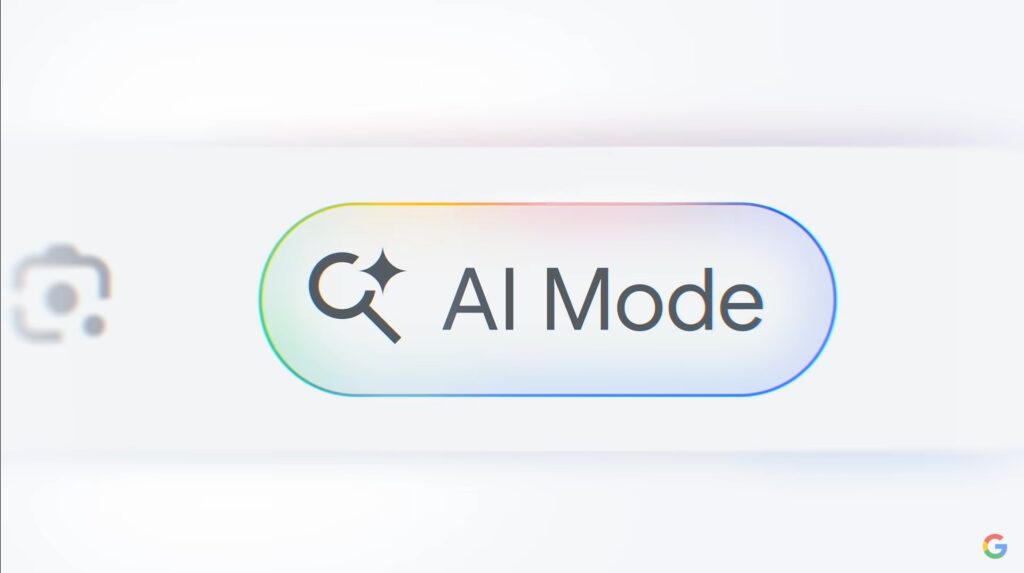
Google officially released “Ask Maps” on March 12, 2026. This was the moment local search transitioned from database retrieval to machine inference. In the old model, a user typed “plumber San Diego” and scrolled through a list. Now, they tap a glowing button and have a conversation. Gemini analyzes data from 300 million places and 500 million reviews to provide a narrative recommendation.
This update changed the unit of competition. In a traditional Maps experience, you fought for a spot in the 3-Pack based on proximity and star ratings. In Ask Maps, interpretation matters more than location. The AI performs “Attribute Matching.” It weighs the specific language in your reviews against the situational needs of the user. If someone asks for a “quiet coffee shop with fast Wi-Fi and a vegan menu,” the AI reasons across your profile and review sentiment. If your data is generic, you do not exist to the machine. You are algorithmically excluded.
Query fan-out is the mechanical brain of this shift. It is the process AI engines use to turn one simple question into many related searches before generating an answer. Traditional search took one query and returned one list. Query fan-out takes one prompt, breaks it into 5 to 20 sub-queries, and runs them all in parallel.
Google documented this technique in Patent US11663201B2. When a user asks about your business, the LLM generates “query variants.” These cover different aspects of the initial topic, such as pricing, expert reviews, and real-time availability. The system then uses a procedure called Reciprocal Rank Fusion to merge the results into a single synthetic response.
Your visibility depends on whether you have the best passage for any of those synthetic queries. These are queries you cannot predict with traditional keyword research. The AI is looking for “Answer Chunks.” It wants clear, structured data it can extract without summarizing an entire page. If your site is built on thin “Service Area” pages from 2019, the fan-out mechanism will simply bypass your brand for a competitor with better topical depth.
The selectivity of AI platforms is the new barrier to entry. New research from the 2026 SOCi Local Visibility Index found that ChatGPT recommends just 1.2% of all local business locations. For comparison, Google’s traditional 3-Pack features 35.9% of locations. This means AI visibility is roughly 30 times harder to achieve than a traditional ranking.
AI engines operate on a “Threshold Logic.” They do not rank every company. They only select those that exceed a specific quality and trust threshold. Data shows that businesses recommended by ChatGPT have an average star rating of 4.3. Gemini is slightly more inclusive, recommending 11% of locations, but the trend is clear. The “Zero-Click” standard has also accelerated. 93% of AI Mode search sessions now end without a single click to a third-party website. Users are making final purchasing decisions based entirely on the AI’s narrative summary and citations. If you are not part of that summary, you are losing leads before they even know you exist.
Local SEO is no longer about chasing algorithms. It is about earning credibility across human and AI audiences simultaneously. We focus on “Signal Health.” This is the coherence of your business data across the entire web.
AI models learn about your brand from four primary sources:
Inconsistencies are visibility killers. If your phone number on Facebook does not match your Google Business Profile, the AI loses confidence. Inconsistent data was responsible for 45% of all profile suspensions in late 2025. The AI needs to see your business as a “verified entity” rather than just a collection of web pages.
Winning in a recommendation-first environment requires a specific technical setup. You have to build a digital ecosystem that LLMs can trust and retrieve.
Your Name, Address, and Phone (NAP) details must be identical everywhere. This anchors your identity. Even a single character difference across platforms can cause AI tools to doubt your legitimacy. We use the “sameAs” schema property to explicitly link your GBP to your social profiles and official site. This creates a coherent “entity map” for the machine.
AI retrieval systems favor content that is “chunkable.” You should break your pages into 200 to 300-word topical segments with clear headers. Lead every section with a direct one-sentence answer to an implicit question. Use FAQ blocks that address real customer questions in plain English. This formatting improves the accuracy of AI extraction.
The total number of stars is less significant than the “qualitative narrative” within your reviews. Gemini reads the text of reviews to understand your “vibe.” We prompt customers to mention specific services and problems solved. A review that says “they fixed my AC in two hours” is a stronger ranking signal for an emergency query than a generic five-star rating.
Schema markup is no longer optional. It is the language of the machine. You must implement LocalBusiness, Service, and FAQPage schema site-wide. This tells Google exactly what you sell and where you operate without forcing the AI to guess.
The strategies that won in 2022 are now liabilities. You cannot out-content the AI, and you cannot out-publish the volume of the machines. What you can do is build something the AI cannot replicate: real authority and verified expertise.
Most agencies are still selling “SEO packages” that focus on monthly reports and keyword counts. These are vanity metrics in a zero-click world. We build “Visibility Infrastructure” through our Soar Visibility Stack (SVS). This is an ongoing management system for your search signals. We monitor your “Truth Anchors” daily to ensure the machine has 100% certainty when it cites you as the best option. If you are still waiting for the phone to ring while your profile sits in digital dust, you have already lost the lead. The competitor who treated their visibility as infrastructure has already won.