
Unlock your business’s potential with MRB Media’s expert SEO-driven marketing and web design strategies. Book a consultation to start your journey to online success today!
Follow Us Anywhere!
©2024 MRB Media, Inc. | All rights reserved.


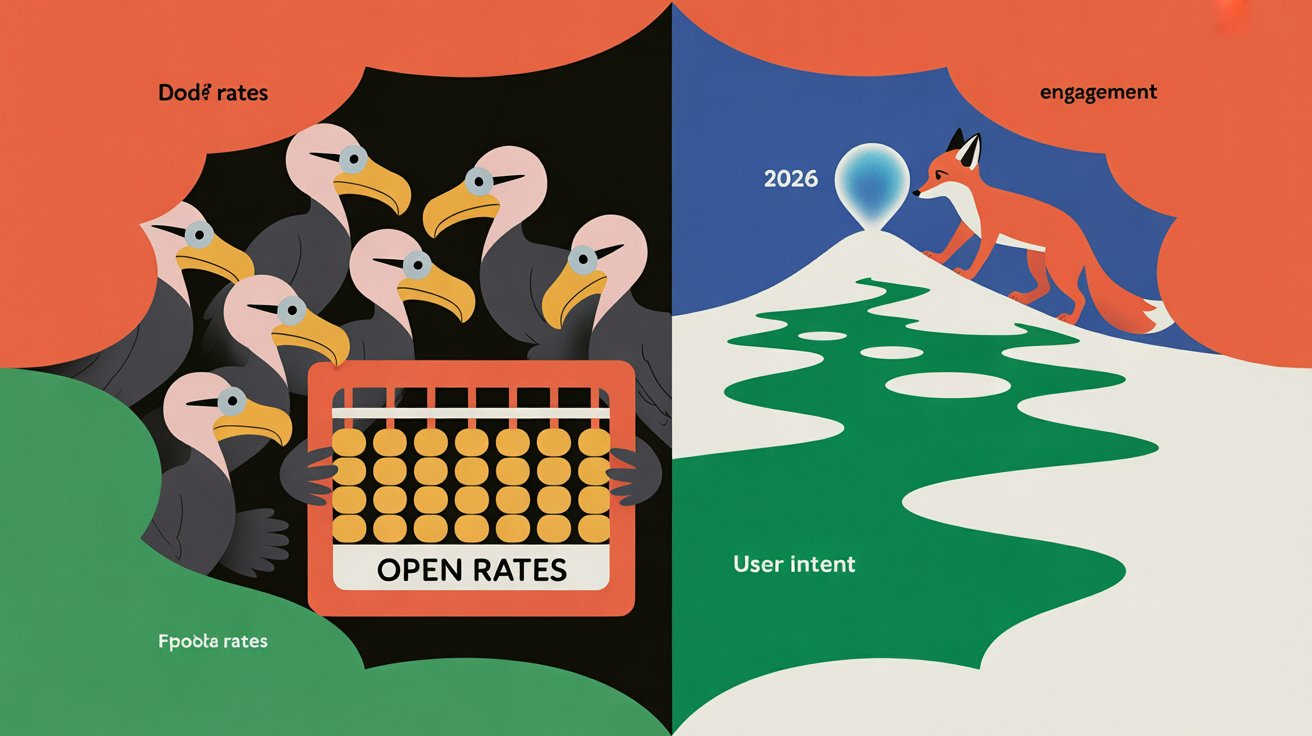
For years, open rates were treated as the primary indicator of email success. A higher open rate meant better subject lines, stronger engagement, and healthier lists. Marketers built strategies, reports, and decisions around that number. But that era is over.
Open rates are no longer a trustworthy signal of human behavior. Changes in privacy, email clients, and tracking technology have fundamentally broken the metric. If you are still using open rates to judge performance, you are making decisions based on incomplete and often inaccurate data.
Understanding what really matters to rank in 2026 means letting go of metrics that no longer reflect reality.
Apple’s Mail Privacy Protection and similar privacy features automatically load tracking pixels in emails, even when users never open them. This inflates open rates and makes it impossible to distinguish between real human interaction and automated behavior.
At the same time, some email clients block tracking pixels entirely. That means some genuine opens are never recorded. The result is a metric that is both overcounted and undercounted, depending on the device and client.
When a metric cannot consistently measure the same behavior, it loses decision-making value.

Even when open rates were accurate, they only measured one thing: curiosity. An open does not mean someone read the email, understood the message, or took action. It does not indicate trust, intent, or conversion readiness.
A subject line can inflate opens while the body of the email delivers no value. High open rates paired with low clicks or sales are a common pattern. This creates a false sense of success that hides deeper problems.
If your goal is business growth, curiosity alone is not enough.
When teams optimize for open rates, they often sacrifice clarity and relevance. Sensational subject lines, vague curiosity hooks, and misleading teasers may increase opens temporarily but damage trust long term.
Subscribers learn quickly when emails fail to deliver on their promise. Over time, this erodes engagement and increases unsubscribes, even if open rates appear healthy.
Modern engagement is about behavior, not signals. It is measured by what people do after receiving your message, not whether an invisible pixel fired.
What really matters to rank in 2026 is evidence of intent and value exchange.
Click-through rate is a stronger indicator of engagement because it requires action. Clicking means the reader found something compelling enough to explore further.
Not all clicks are equal, though. Meaningful clicks are those that move a user closer to a business goal, such as viewing pricing, reading a key article, or booking a call.
Tracking which links are clicked provides insight into what messages resonate and what offers drive action.
Reply-based engagement is one of the strongest indicators of connection. When someone replies to an email, they are initiating a conversation. This signals trust, interest, and readiness that no open rate can capture.
Replies also improve deliverability. Email providers interpret replies as a positive signal, increasing the likelihood that future emails reach the inbox.
Encouraging replies through thoughtful prompts can transform email from a broadcast channel into a relationship channel.
Engagement is cumulative. Someone who opens three emails, clicks one, visits your site, and returns later shows far more value than someone who opens ten emails and never acts.
This is where website behavior becomes essential. Tracking what happens after the click reveals whether your email content aligns with your website messaging and offers.
Testing your website in conjunction with email campaigns helps close the loop between messaging and conversion.
| Metric | What It Measures | Why It Matters in 2026 |
|---|---|---|
| Open Rate | Pixel activity | Unreliable due to privacy filters |
| Click Rate | User action | Shows interest and direction |
| Replies | Conversation | Indicates trust and readiness |
| Conversions | Goal completion | Direct business impact |
Engagement today is measured by action, not assumptions.
Shifting away from open rates requires intention. The goal is not to track more data, but to track better data.
What really matters to rank in 2026 is alignment between message, behavior, and outcome.
Every email should have one primary purpose. That could be clicking a link, replying with a question, downloading a resource, or scheduling a call.
If you cannot clearly state the goal of an email, you cannot accurately measure its success.
Clicks alone are not enough. You need to know where clicks lead and what happens next. Use tagged links and analytics to follow the user journey beyond the inbox.
This is where testing your website becomes essential. If users click but do not convert, the issue may not be the email but the landing page.
Revenue and conversion tracking provide the clearest picture of impact. Whether the goal is lead generation, sign-ups, or sales, measuring outcomes ties email performance to business results.
This also helps identify which messages attract high-quality engagement instead of superficial interest.
Not all subscribers engage the same way. Segmenting your list based on behavior allows more accurate measurement and more relevant messaging.
Engaged readers should receive different content than inactive subscribers. Treating them the same dilutes engagement and distorts metrics.
Engagement should be viewed as a trend, not a snapshot. A single campaign rarely tells the full story. Patterns over weeks and months reveal whether your strategy is building momentum or losing relevance.
“Metrics that don’t drive decisions don’t drive growth. Modern engagement is defined by action, not assumption.”
Email metrics cannot exist in isolation. Engagement continues on your website. Testing your website helps validate whether your messaging, structure, and offers support the intent created by your emails.
When users click but do not convert, the problem often lies in clarity, friction, or misalignment between the email promise and the landing page experience.
Testing your website regularly ensures that engagement translates into growth.
Open rates once served a purpose, but they no longer reflect reality. Clinging to them creates blind spots that limit growth. What really matters to rank in 2026 is understanding behavior, intent, and outcomes.
Modern engagement is action-based. Clicks, replies, conversions, and revenue tell a story that open rates never could. When you focus on metrics that reflect real value exchange, your decisions become clearer and your results improve.
If you want growth, stop measuring curiosity and start measuring commitment.
👉Book a Free Discovery Call to run the 15-minute test together, uncover where confusion is costing you conversions, and create a clear message that supports real business growth and clarity.