Unlock your business’s potential with MRB Media’s expert SEO-driven marketing and web design strategies. Book a consultation to start your journey to online success today!
Follow Us Anywhere!
©2024 MRB Media, Inc. | All rights reserved.


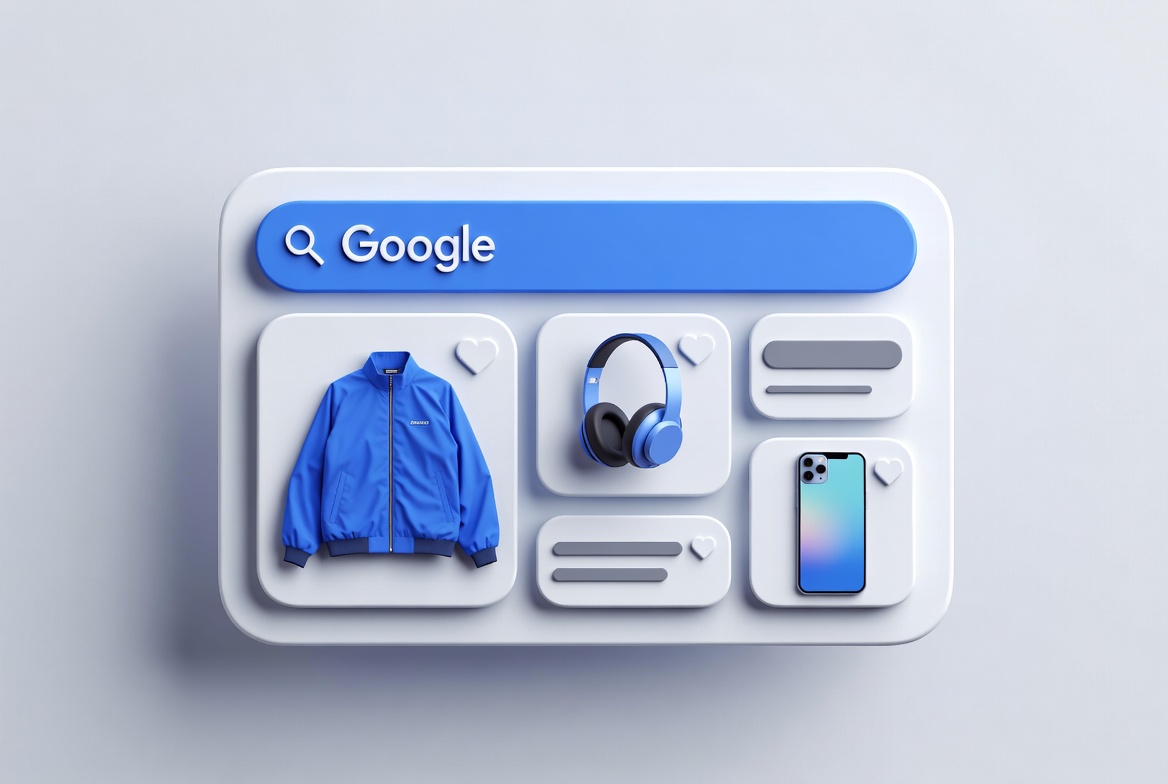
A shopper types a complex prompt into Google. They ignore long lists of links. They want a specific answer. They ask Gemini to find a light moisturizer for sensitive skin that does not leave a greasy residue. Instantly, an ad appears. This copy wasn’t drafted weeks ago by an agency copywriter. Google’s Gemini engine built it three seconds ago. It directly addresses the greasy residue question using product specifications. This is the new reality of digital retail.
Google collapsed the gap between discovery and transaction at Google Marketing Live on May 20, 2026. The platform launched AI-Powered Shopping Ads, turning traditional search ads into real-time persuasion tools. Powered by Gemini, the system now writes custom product explainers on the fly to match a user’s exact conversational prompt.
This update shifts the ad auction from keyword matching to intent resolution. E-commerce managers have spent a decade stuffing keywords into product titles. That strategy has hit a wall. In the conversational search environment, Google’s AI reads your raw feed attributes, customer reviews, and landing pages to decide which products actually fit. If your Merchant Center data is messy, you are excluded. The machine cannot build a case for your product, so it ignores you.
“Keywords are no longer the primary currency of search. In the conversational ad space, your product feed attributes are the ad copy.”
The backend architecture of AI-Powered Shopping Ads translates complex technical specifications from your feed into simple, helpful summaries. The AI explains to the user exactly why a specific product is the best answer to their query
This is powered by AI Max for Shopping. The algorithm analyzes intent and dynamically matches it to the most relevant landing pages on your website. It also selects the best format to show. This could be a text ad or a shopping ad, depending on what the shopper needs at that exact second. Google’s global data shows that non-retail campaigns using AI Max for Search saw an average 7% increase in conversions or conversion value at a stable CPA or ROAS after enabling these text customization features. The conversion efficiency is real, but the system relies entirely on your data quality.
The changes extend beyond custom ad text. Google is expanding its Direct Offers pilot beyond simple product viewers directly into AI Mode answers. This allows Gemini to automatically bundle discounts, giveaways, and local coupons based on active intent.
For example, if a shopper is looking for running shoes and expresses price hesitation, the AI can bundle a 20% discount code with a local store pickup option. This happens automatically within the search interface.
To close the conversion loop, Google launched the Universal Commerce Protocol (UCP). This framework allows consumers to complete purchases directly across Google Search, Maps, and YouTube using a persistent Universal Cart powered by Google Pay. Buyers bypass your website checkout completely. This frictionless shopping experience is highly efficient, but it requires a perfect technical setup. The AI must be able to read your inventory, pricing, and shipping terms with absolute certainty.
The traditional search results page is changing rapidly. A recent analysis of 25 million organic impressions revealed that traditional organic CTR falls by 61% when an AI Overview appears. Paid CTR also drops by 68%. Even so, visitors arriving from AI search features convert at more than quadruple the rate of traditional organic traffic. These users are more informed and ready to buy
To capture this high-intent traffic, you must treat your product feed as your visibility infrastructure. At MRB Media, we build the data architecture that feeds Google’s AI recommendation models. We look beyond basic ad campaigns to optimize your entire search footprint. We audit your categories, clean up your attribute fields, and ensure your site is readable for conversational search. You can deploy the complete toolsets in the(https://mrbmedia.org/services/seo-visibility/) to protect your listings and keep your operating costs flat.
If you are still optimizing for broad keywords while your product feed sits in digital dust, your brand is slipping into algorithmic exclusion. You can protect your margins and future-proof your sales by scheduling a call with our team to audit your search readiness.