
Unlock your business’s potential with MRB Media’s expert SEO-driven marketing and web design strategies. Book a consultation to start your journey to online success today!
Follow Us Anywhere!
©2024 MRB Media, Inc. | All rights reserved.



[et_pb_section fb_built=”1″ admin_label=”section” _builder_version=”4.27.0″ custom_margin=”0px|0px|0px|0px|false|false” custom_padding=”0px|0px|0px|0px|false|false” global_colors_info=”{}”][et_pb_row admin_label=”row” _builder_version=”4.27.0″ background_size=”initial” background_position=”top_left” background_repeat=”repeat” width=”100%” custom_margin=”0px||||false|false” custom_padding=”0px||||false|false” global_colors_info=”{}”][et_pb_column type=”4_4″ _builder_version=”4.16″ custom_padding=”|||” global_colors_info=”{}” custom_padding__hover=”|||”][et_pb_text admin_label=”%91Text%93 The Pervasive Threat of Digital Marketing Scams” _builder_version=”4.27.0″ _module_preset=”default” global_colors_info=”{}”]
Businesses must navigate a minefield of potential website scams and fraudulent activities. From fake search engine optimization (SEO) services to phishing attacks and bogus web design offerings, digital marketing is rife with deceitful practices aimed at exploiting unsuspecting companies. It’s crucial for businesses to remain vigilant and informed about these prevalent scams to safeguard their resources, reputation, and online presence.
One of the most common scams is the promise of top search engine rankings through black hat techniques or outright inaction. Scammers lure businesses with the allure of soaring to the top of search results, only to deliver subpar or non-existent services, potentially leading to search engine penalties and wasted marketing budgets.
Another insidious threat is phishing attacks, in which fraudulent emails or websites mimic legitimate entities to steal login credentials or financial information. These attacks can compromise business security, exposing sensitive data and leaving companies vulnerable to further exploitation.
[/et_pb_text][et_pb_image src=”https://mrbmedia.org/wp-content/uploads/2024/07/white-hat-vs-black-hat-seo-infographic.jpg” alt=”White Hat vs. Black Hat SEO Infographic” title_text=”White Hat vs. Black Hat SEO Infographic” show_in_lightbox=”on” admin_label=”%91Infographic%93 White Hat vs. Black Hat” _builder_version=”4.27.0″ _module_preset=”default” global_colors_info=”{}”][/et_pb_image][et_pb_text admin_label=”%91Text%93 1. Fake SEO Services” _builder_version=”4.27.0″ _module_preset=”default” global_colors_info=”{}”]
Moreover, these techniques are ineffective in the long run, as search engines continually update their algorithms to identify and penalize such practices. Instead of risking your website’s reputation and organic search performance, it is crucial to invest in ethical, white-hat SEO strategies that prioritize creating high-quality, relevant content and building a solid online presence through legitimate means. This approach may take more time and effort, but it ensures sustainable, long-term success without the risk of penalties or reputational damage.
[/et_pb_text][et_pb_image src=”https://mrbmedia.org/wp-content/uploads/2024/07/infographic-phishing-attack-flowchart.jpg” alt=”Flowchart showing the steps of a phishing attack from deceptive email to data compromise.” title_text=”Phishing Attack Flowchart” show_in_lightbox=”on” admin_label=”%91Infographic%93 Phishing Flowchart” _builder_version=”4.27.0″ _module_preset=”default” global_colors_info=”{}”][/et_pb_image][et_pb_text admin_label=”%91Text%93 2. Phishing Attacks” _builder_version=”4.27.0″ _module_preset=”default” global_colors_info=”{}”]
Phishing scams are a common form of cyber attack in which scammers pretend to be trustworthy sources to steal sensitive information like login credentials, financial data, or personal details. These scams often involve creating fake websites that look like real ones or sending deceptive emails that seem to be from reputable sources.
The methods used in phishing attacks vary, but they usually involve social engineering techniques to trick unsuspecting victims into giving away sensitive information or clicking on harmful links. Scammers may send urgent emails or create websites with persuasive language and official-looking branding to lure victims into taking the desired action.
For businesses, phishing attacks come with serious risks, including:
Businesses need to implement strong cybersecurity measures, including employee training, multi-factor authentication, advanced email filtering, and web security solutions, to reduce the risks of phishing attacks.
[/et_pb_text][et_pb_image src=”https://mrbmedia.org/wp-content/uploads/2024/07/infographic-professional-web-design-vs-poorly-designed-website.jpg” alt=”Side-by-side comparison of a professional web design and a poorly designed website, highlighting key differences.” title_text=”Professional vs. Poor Web Design Comparison” show_in_lightbox=”on” admin_label=”%91Infographic%93 Professional Web Design vs. Poorly Designed Website” _builder_version=”4.27.0″ _module_preset=”default” global_colors_info=”{}”][/et_pb_image][et_pb_text admin_label=”%91Text%93 3. Bogus Web Design Services” _builder_version=”4.27.0″ _module_preset=”default” global_colors_info=”{}”]
Fraudulent agencies often lure businesses with promises of sleek, professional websites at unbeatable prices. However, their true intentions are far more sinister. These scammers will take upfront payments without intending to deliver the promised website design or development services. Even if they provide a website, it’s often subpar, plagued with issues, and fails to meet the agreed-upon specifications.
By preying on businesses’ desire for affordable web solutions, these scammers defraud companies of their hard-earned money and waste valuable time and resources. The consequences can be severe, from lost revenue opportunities to long-term reputational damage. Businesses may find themselves stuck with a poorly designed website that fails to attract or engage their target audience, ultimately hindering their online success.
Methods Used:
Methods Used:
Methods Used:
Methods Used:
Methods Used:
Methods Used:
[/et_pb_text][et_pb_text admin_label=”%91Text%93 4. Click Fraud in PPC Campaigns ” _builder_version=”4.27.0″ _module_preset=”default” global_colors_info=”{}”]
Businesses often invest in pay-per-click (PPC) advertising campaigns to drive targeted traffic and generate leads. However, unscrupulous individuals or agencies may engage in click fraud, a deceitful practice that can drain your PPC budget without delivering any genuine traffic or leads.
Click fraud occurs when someone intentionally clicks on your PPC ads with no intention of engaging with your business or making a purchase. This can be done manually or through automated means, such as bots or click farms. The goal of click fraud is to generate fraudulent clicks that deplete your advertising budget, resulting in wasted marketing dollars.
[/et_pb_text][et_pb_code admin_label=”%91Code%93 Click Fraud Impact Graph ” _builder_version=”4.27.0″ _module_preset=”default” global_colors_info=”{}”]
A graph illustrating the impact of click fraud on ad spend and ROI over time. The red line shows a sharp increase in ad spend due to fraudulent clicks, while the blue line demonstrates a corresponding decline in ROI, highlighting the financial detriment caused by click fraud.
[/et_pb_code][et_pb_text admin_label=”%91Text%93 Remainder of #4″ _builder_version=”4.27.0″ _module_preset=”default” global_colors_info=”{}”]
The consequences of click fraud can be severe. Not only do you end up paying for worthless clicks, but your advertising data becomes skewed, making it challenging to optimize your campaigns effectively. Additionally, if the click fraud is detected by the advertising platform, your account may face penalties or even suspension, further hampering your marketing efforts.
To combat click fraud, it’s essential to monitor your PPC campaigns closely and watch for any unusual patterns or spikes in click activity. Reputable advertising platforms like Google Ads have built-in fraud detection systems, but it’s still crucial to stay vigilant and report any suspicious activity promptly.
[/et_pb_text][et_pb_text admin_label=”%91Text%93 5. Fake Social Media Management” _builder_version=”4.27.0″ _module_preset=”default” global_colors_info=”{}”]
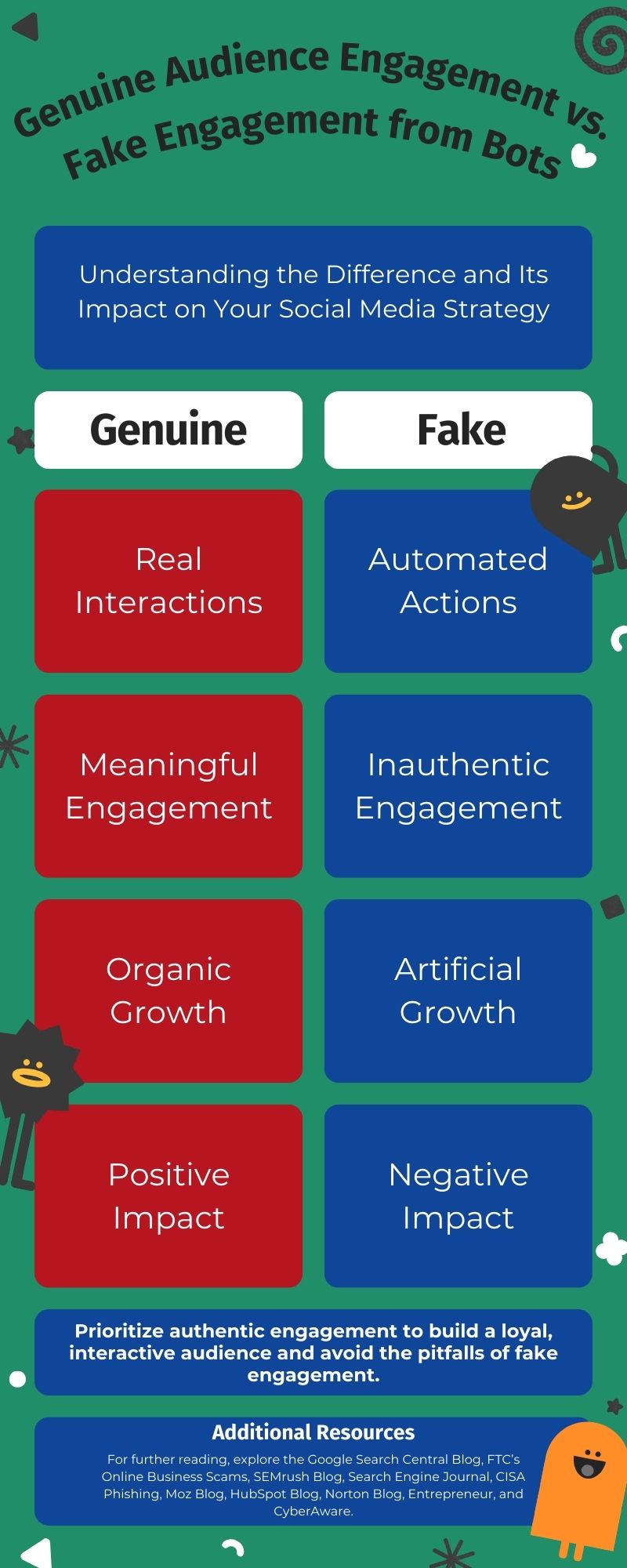
An infographic illustrating the key differences between genuine audience engagement and fake engagement from bots, emphasizing the importance of authentic interactions for effective social media strategy.
One of the most prevalent scams in the digital marketing world is the promise of comprehensive social media management services that ultimately fail to deliver. Fraudulent agencies lure businesses with the prospect of engaging their audience and boosting their online presence, only to leave them with stagnant accounts and irrelevant content.
These scammers often employ tactics such as posting generic, low-quality content or recycling the same material across multiple platforms. They may also resort to using automated bots or purchasing fake followers and engagement, which can harm your brand’s credibility and reputation.
Moreover, a lack of genuine audience engagement and interaction can be detrimental to your social media strategy. Without a deep understanding of your target audience and industry, these agencies are unable to craft compelling content that resonates with your followers, resulting in a missed opportunity to build meaningful connections and drive conversions.
Worse yet, some scammers may even post inappropriate or offensive content on your social media channels, putting your brand’s image at risk and potentially alienating your customer base. This can lead to a significant loss of trust and loyalty, which can be challenging to regain.
[/et_pb_text][et_pb_text admin_label=”%91Text%93 6. Domain Registry Scams” _builder_version=”4.27.0″ _module_preset=”default” global_colors_info=”{}”]
One of the most common website scams targets businesses during the domain renewal process. Companies receive misleading notices that appear to be from legitimate domain registrars, but are actually from fraudulent third-parties. These notices often use language and formatting that closely resembles official renewal invoices, tricking unsuspecting recipients into paying for unnecessary or fraudulent domain renewal services.
The scammers capitalize on the fact that many businesses fail to carefully review domain renewal notices, assuming they are legitimate and paying the fees without scrutiny. However, by responding to these fraudulent notices, companies may inadvertently renew their domains through disreputable registrars, potentially compromising the security and control of their online assets.
To avoid falling victim to domain renewal scams, it’s crucial to remain vigilant and scrutinize any renewal notices thoroughly. Always verify the sender’s legitimacy by cross-checking with your current domain registrar’s official website or contacting their customer support directly. Reputable registrars will never use deceptive tactics or pressure you into unnecessary renewals or services.
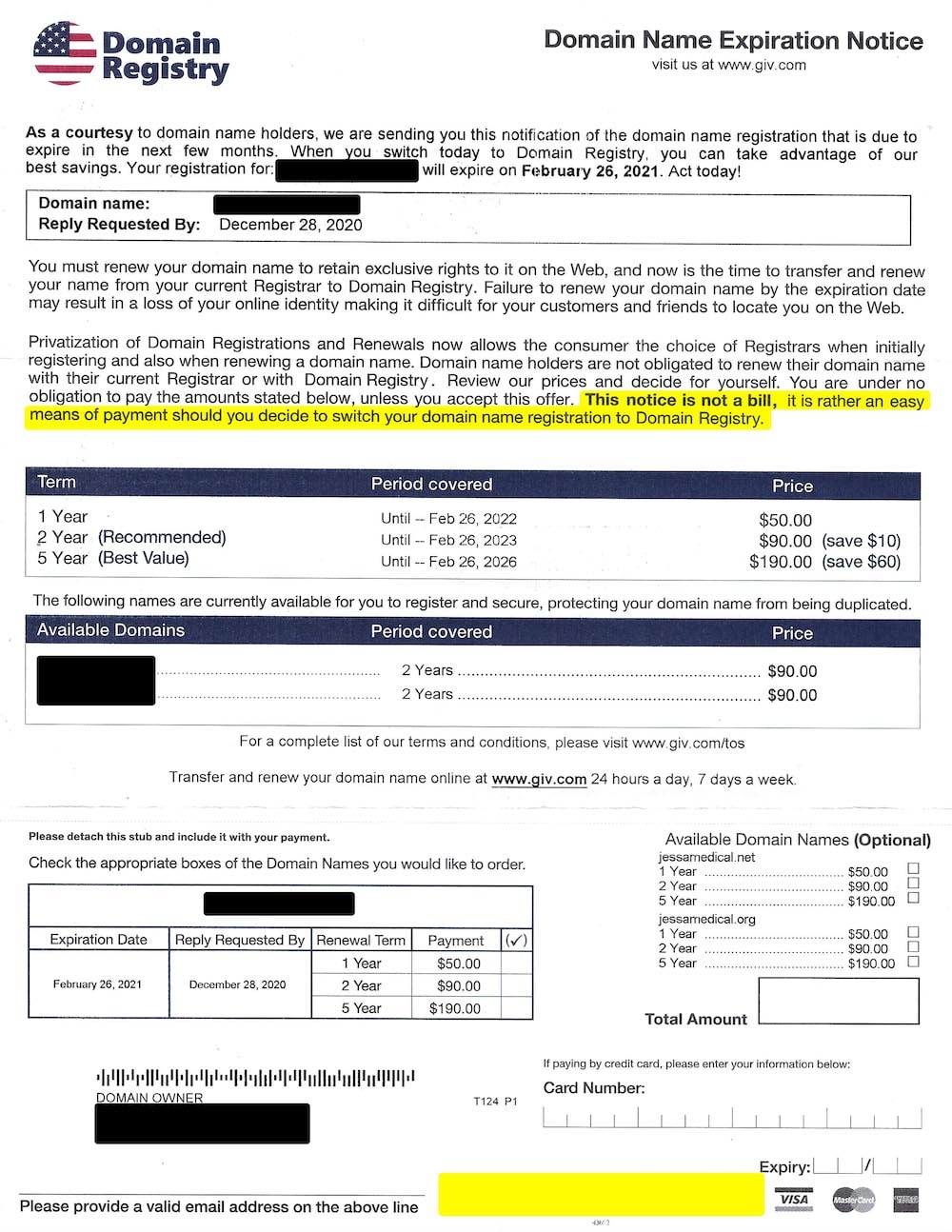
An example of a scam letter from US Domain Registry, falsely claiming domain expiration and urging businesses to switch registrars at inflated rates.
One of the most persistent scams we encounter is the misleading domain renewal notices sent by US Domain Registry. These scam letters appear to be official and urgent, often using language and formatting similar to legitimate renewal invoices. Their goal is to trick businesses into switching their domain registrar at highly inflated rates, sometimes 10 times the usual cost.
Many of our customers have received these letters but wisely contacted us to confirm their legitimacy, thereby avoiding falling victim to the scam.
To clarify, you will never receive a letter from us in the mail regarding domain renewals. Anything you do receive in the mail is probably a scam. However, if you are ever unsure about the authenticity of a renewal notice, please contact us and ask. We are here to help ensure your business stays protected from these fraudulent practices.
Always scrutinize any renewal notices you receive. Check the sender’s legitimacy by cross-referencing with your current domain registrar’s official communications or contacting their customer support. Remember, reputable registrars will never use deceptive tactics or pressure you into unnecessary renewals. Stay vigilant and protect your business from these scams.
[/et_pb_text][et_pb_text admin_label=”%91Text%93 7. Advance Fee Fraud” _builder_version=”4.27.0″ _module_preset=”default” global_colors_info=”{}”]
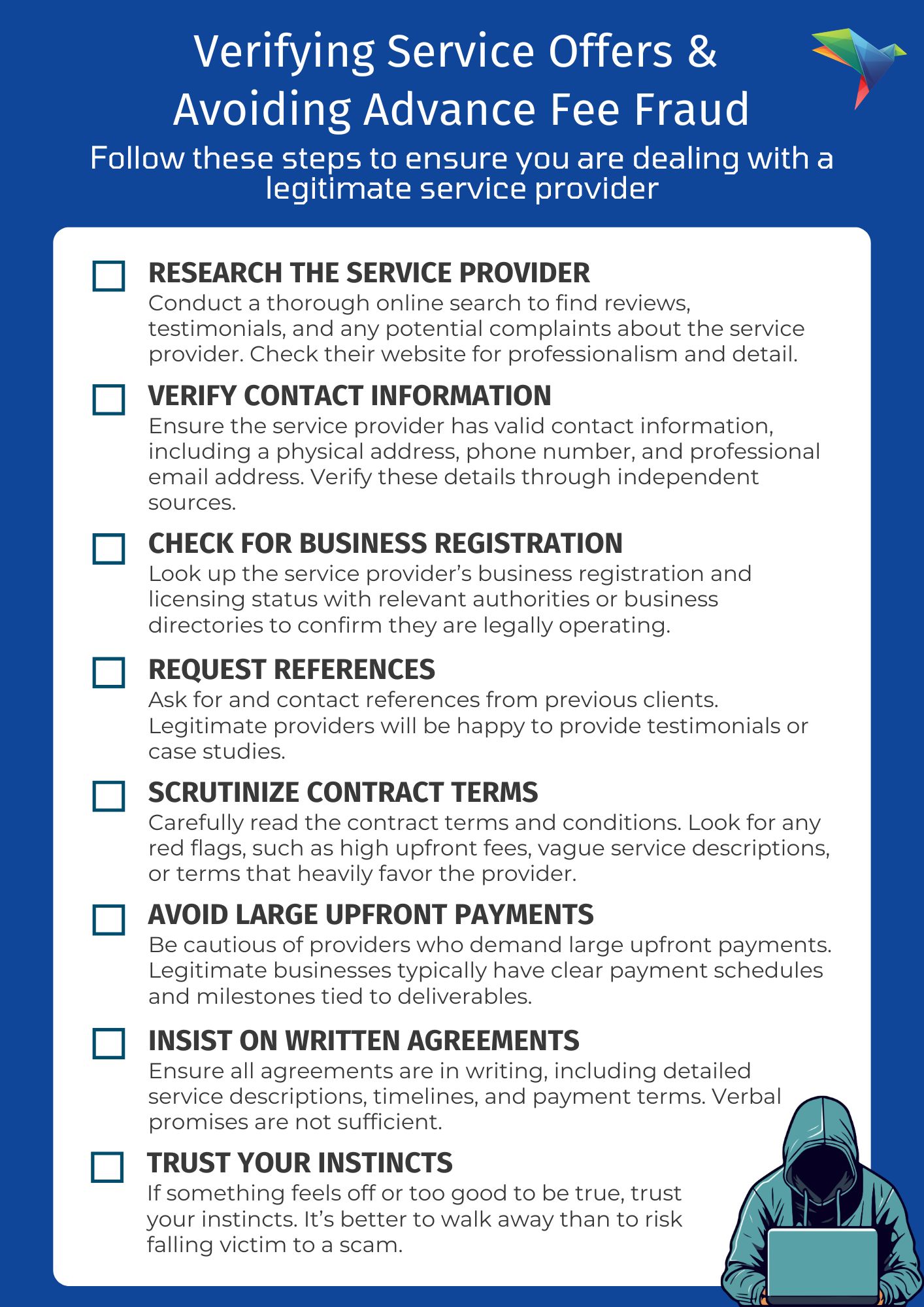
Follow this checklist to ensure you are dealing with a legitimate service provider and to avoid falling victim to advance fee fraud.
Advance fee fraud is a common scam where fraudulent agencies request an upfront payment or advance fee for services they claim to provide, but never actually deliver. This scam often targets businesses with promises of securing high-profile clients, exclusive advertising spots, or other enticing opportunities.
The modus operandi of these scammers is to lure unsuspecting businesses with grandiose claims and persuasive pitches. They may promise to secure lucrative contracts with major corporations or offer access to highly coveted advertising platforms. However, once the advance fee is paid, the scammers disappear without fulfilling their promises, leaving the victim business out of pocket and without the promised services or opportunities.
Advance fee fraud can be particularly damaging for businesses, as the promised opportunities can seem too good to pass up, and the upfront fees can be substantial. Scammers often use high-pressure tactics and a sense of urgency to coerce businesses into making hasty decisions and parting with their money.
It’s crucial to exercise caution when dealing with agencies or individuals making extravagant promises and demanding advance payments. Legitimate businesses rarely require substantial upfront fees for services that have yet to be rendered. Thoroughly research any agency or individual before committing to any financial transactions, and be wary of offers that seem too good to be true.
[/et_pb_text][dipl_button buttons_alignment=”center” admin_label=”%91Button%93 Checklist Download” _builder_version=”4.27.0″ _module_preset=”default” global_colors_info=”{}”][dipl_button_item button_type=”conversion” button_text=”Download Our Checklist” secondary_text=”Verifying Service Offers & Avoiding Advance Fee Fraud” button_url=”https://mrbmedia.org/wp-content/uploads/2024/07/MRB-Media-Checklist-Verifying-Service-Offers-Avoiding-Advance-Fee-Fraud.pdf” _builder_version=”4.27.0″ _module_preset=”97115aea-1d32-4f82-aa61-ba213f34ee71″ global_colors_info=”{}” button_bg_enable_color__hover=”on” button_bg_color__hover_enabled=”on|desktop”][/dipl_button_item][/dipl_button][et_pb_text admin_label=”%91Text%93 8. Fake Invoices: Tricking Busy Accounts Departments” _builder_version=”4.27.0″ _module_preset=”default” global_colors_info=”{}”]
Fake invoices are a common scam that targets businesses, aiming to trick busy accounts departments into paying for services or products they never ordered. These fraudulent invoices are carefully crafted to appear legitimate, often using the branding and logos of well-known companies or service providers.
The scammers behind these fake invoices rely on the fact that many accounts departments process numerous invoices daily, making it easier for fraudulent ones to slip through the cracks. They bank on the assumption that overworked employees might not thoroughly verify every single invoice, especially if the amounts seem relatively small or the company name appears familiar.
These scams can take various forms, such as invoices for office supplies, software subscriptions, or even bogus advertising or marketing services. The scammers may also leverage the names of legitimate businesses that the targeted company has previously worked with, making the invoices seem even more plausible.
To protect against this scam, it’s crucial for businesses to implement strict invoice verification procedures. This includes cross-checking all invoices against actual orders or services rendered, verifying the legitimacy of the company or service provider, and being wary of any unexpected or unfamiliar invoices, no matter how small the amount.
[/et_pb_text][et_pb_image src=”https://mrbmedia.org/wp-content/uploads/2024/07/infographic-best-practices-for-ethical-email-marketing-vs-spammy-tactics.jpg” alt=”Infographic comparing ethical email marketing practices with spammy tactics, highlighting differences in list building, content quality, consent and privacy, personalization, and compliance.” title_text=”Best Practices for Ethical Email Marketing vs. Spammy Tactics” show_in_lightbox=”on” admin_label=”%91Infographic%93 Best Practices for Ethical Email Marketing vs. Spammy Tactics” _builder_version=”4.27.0″ _module_preset=”default” global_colors_info=”{}”][/et_pb_image][et_pb_text admin_label=”%91Text%93 9. Email Marketing Scams” _builder_version=”4.27.0″ _module_preset=”default” global_colors_info=”{}”]
Reputable email marketing agencies follow best practices to ensure your campaigns are effective and compliant with anti-spam laws. However, some scammers claim to offer comprehensive email marketing services but engage in spammy tactics that can severely damage your domain’s reputation and deliverability.
These unethical practices include purchasing or harvesting email lists filled with addresses that haven’t opted-in, sending unsolicited bulk emails, and using deceptive subject lines or content. While this may initially inflate open and click-through rates, it ultimately leads to high bounce rates, complaints, and potential blacklisting by email providers.
Legitimate email marketing focuses on building an engaged subscriber list through opt-in forms and providing valuable, targeted content. Reputable agencies also monitor metrics like bounce rates, unsubscribe rates, and spam complaints to maintain a healthy sender reputation. Any agency promising unrealistically high open rates or using tactics that violate anti-spam regulations should raise a red flag.
Ultimately, these scams not only waste your marketing budget but can severely cripple your ability to reach inboxes, undermining the entire email marketing strategy. Protecting your domain’s reputation is crucial for long-term email marketing success.
[/et_pb_text][et_pb_image src=”https://mrbmedia.org/wp-content/uploads/2024/07/infographic-best-practices-for-ethical-reputation-management-vs-unethical-tactics.jpg” alt=”Infographic comparing ethical reputation management practices with unethical tactics, highlighting differences in generating reviews, handling negative feedback, review solicitation, review authenticity, and competitor reviews.” title_text=”Best Practices for Ethical Reputation Management vs. Unethical Tactics” show_in_lightbox=”on” admin_label=”%91Infographic%93 Best Practices for Ethical Reputation Management vs. Unethical Tactics” _builder_version=”4.27.0″ _module_preset=”default” global_colors_info=”{}”][/et_pb_image][et_pb_text admin_label=”%91Text%93 10. Online Reputation Management Scams” _builder_version=”4.27.0″ _module_preset=”default” global_colors_info=”{}”]
Maintaining a positive online reputation is crucial for businesses in the digital age. However, some fraudulent agencies exploit this need by promising to repair your online reputation but using illegal or unethical methods that can cause long-term damage.
These scams often involve tactics like creating fake positive reviews, suppressing negative content through dubious means, or even engaging in smear campaigns against competitors. While these practices may provide a temporary boost, they ultimately undermine your brand’s credibility and trustworthiness.
Moreover, such unethical tactics can land your business in legal trouble or result in severe penalties from search engines and online platforms. Once detected, these methods can lead to your website being penalized, diminishing your online visibility and credibility.
Reputable online reputation management services focus on proactive strategies, such as fostering positive customer experiences, encouraging genuine reviews, and transparently addressing any negative feedback. They use ethical techniques to enhance your brand’s online presence, ensuring long-term sustainability and success.
Companies, employees, or even friends and relatives may write fake positive reviews to trick consumers into purchasing a product. These reviews give a false impression of quality and customer satisfaction.
Some companies send products to consumers at no charge, with an unspoken expectation of a positive review. These reviews often fail to mention that the product was provided for free, misleading potential buyers.
Competitors might leave negative reviews on a company’s site, often through friends or employees, to harm the business’s reputation and sway potential customers away.
Companies may suppress negative reviews on their own sites, showcasing only positive feedback. This practice is like a child only showing their parents tests that earned good grades and hiding the rest.
This occurs when a company repurposes reviews from one product to make it appear that another, completely different product has received lots of positive feedback. An example is the February 2023 FTC case against a vitamins company that deceived consumers on Amazon by merging new products into older listings with different products.
[/et_pb_text][et_pb_image src=”https://mrbmedia.org/wp-content/uploads/2024/07/infographic-agencies-acting-as-sales-agents-for-offshore-companies-v2.jpg” alt=”Flowchart illustrating the process of how agencies acting as sales agents for offshore companies operate and the risks involved.” title_text=”Agencies Acting as Sales Agents for Offshore Companies” show_in_lightbox=”on” admin_label=”%91Infographic%93 Agencies Acting as Sales Agents for Offshore Companies” _builder_version=”4.27.0″ _module_preset=”default” global_colors_info=”{}”][/et_pb_image][et_pb_text admin_label=”%91Text%93 11. Agencies Acting as Sales Agents for Offshore Companies” _builder_version=”4.27.0″ _module_preset=”default” global_colors_info=”{}”]
Many digital marketing agencies merely act as sales agents for offshore companies that outsource work to low-cost labor markets. While this business model may seem cost-effective, it carries significant risks that can severely damage your online presence and reputation.
One of the primary dangers is the use of black hat SEO techniques by these offshore teams. Black hat SEO involves unethical practices like keyword stuffing, cloaking, and link farming, which violate search engine guidelines. While these tactics may temporarily boost your rankings, they ultimately lead to severe penalties from Google, causing your website to plummet in search results or get delisted entirely.
Furthermore, the work delivered by these offshore teams is often subpar, lacking in quality and strategic direction. They may create websites with poor user experience, slow loading times, and security vulnerabilities, all of which can negatively impact your online reputation and search engine rankings.
Another issue is the lack of communication and transparency. With multiple layers of middlemen involved, it becomes challenging to convey your business goals and objectives accurately, leading to misaligned strategies and ineffective execution.
By partnering with a reputable, US-based agency like ours, you can avoid these pitfalls and ensure your digital marketing efforts are both effective and secure. Our team of experts follows ethical SEO practices, employs cutting-edge technologies, and maintains open communication channels to deliver tangible results that support your business growth.
[/et_pb_text][et_pb_text admin_label=”%91Text%93 12. Use of Nulled Website Files or Pirated Software” _builder_version=”4.27.0″ _module_preset=”default” global_colors_info=”{}”]
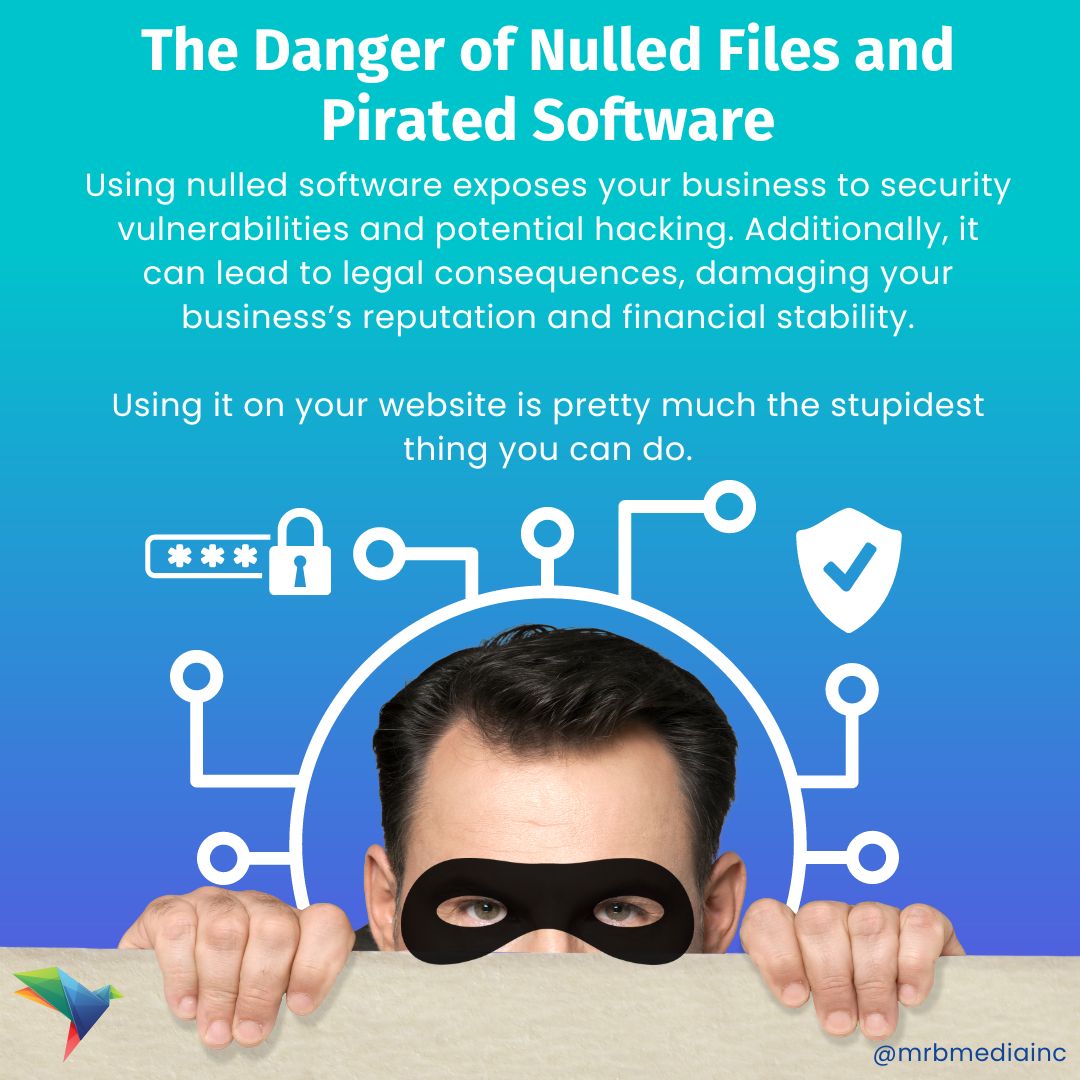
Using nulled software exposes your business to security vulnerabilities and potential hacking, along with legal consequences that can damage your reputation and financial stability.
When agencies resort to using pirated software or nulled website files, they expose your business to significant risks. These illegally obtained resources often lack proper security updates and patches, leaving your website vulnerable to hacking attempts and data breaches.
Nulled website files, which are cracked or modified versions of legitimate software, can contain malicious code or backdoors that cybercriminals can exploit to gain unauthorized access to your website. This can lead to sensitive data being compromised, including customer information, financial records, and proprietary business data.
Furthermore, the use of pirated software violates licensing agreements and intellectual property rights, putting your business at risk of legal consequences and potential lawsuits from software vendors.
Beyond the legal and security implications, using nulled website files or pirated software can severely damage your online reputation. If your website is compromised due to these practices, it can erode customer trust and confidence in your brand, leading to a loss of business and revenue.
Reputable agencies prioritize using legitimate, up-to-date software and tools to ensure the security and performance of your website. They understand the importance of protecting your business from cyber threats and maintaining a positive online reputation.
[/et_pb_text][et_pb_image src=”https://mrbmedia.org/wp-content/uploads/2024/07/flowchart-steps-to-develop-a-comprehensive-digital-strategy.jpg” alt=”A flowchart illustrating the steps to develop a comprehensive digital strategy, including research, planning, execution, and evaluation.” title_text=”Steps to Develop a Comprehensive Digital Strategy” show_in_lightbox=”on” admin_label=”%91Flowchart%93 Steps to Develop a Comprehensive Digital Strategy” _builder_version=”4.27.0″ _module_preset=”default” global_colors_info=”{}”][/et_pb_image][et_pb_text admin_label=”%91Text%93 13. Lack of Strategy and Goals” _builder_version=”4.27.0″ _module_preset=”default” global_colors_info=”{}”]
A common pitfall businesses face is partnering with agencies that solely focus on creating a website without understanding the core business goals or providing a strategic plan to support growth. A website is more than just an online brochure; it should be a powerful tool that drives your business forward and helps you achieve your objectives.
Reputable agencies take the time to understand your unique business needs, target audience, and long-term aspirations. They work closely with you to develop a comprehensive digital strategy tailored to your specific goals, whether it’s increasing online sales, generating leads, or enhancing brand awareness.
By aligning your website with your business strategy, you can ensure that every element, from design and functionality to content and user experience, is optimized to support your growth. A well-crafted strategy also considers factors like search engine optimization, social media integration, and analytics tracking, ensuring that your online presence is visible, engaging, and measurable.
Investing in an agency that prioritizes strategy and goal alignment not only saves you time and resources but also maximizes the return on your investment. With a clear roadmap and measurable objectives, you can track your progress, make data-driven decisions, and continuously refine your digital efforts for long-term success.
[/et_pb_text][et_pb_text admin_label=”%91Text%93 14. Fake Business Directories” _builder_version=”4.27.0″ _module_preset=”default” global_colors_info=”{}”]
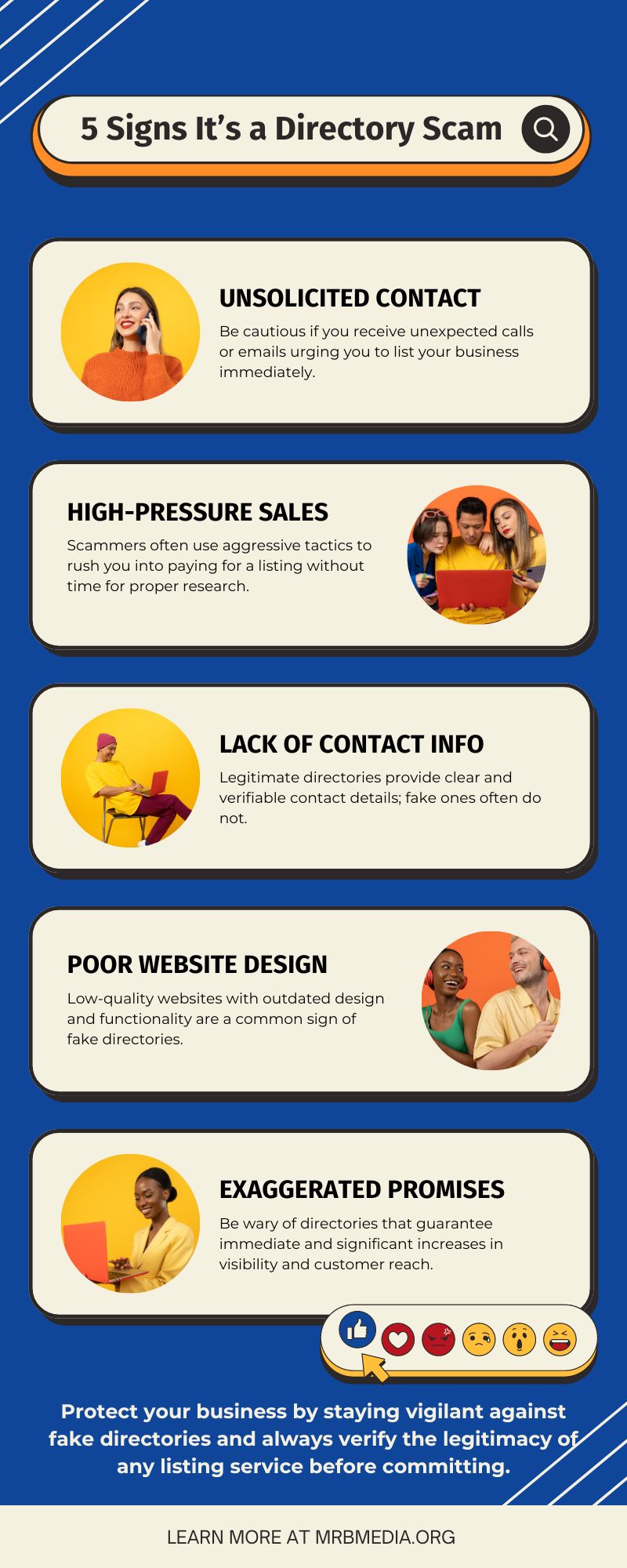
Watch out for these five signs to protect your business from fake directory scams: unsolicited contact, high-pressure sales tactics, lack of contact information, poor website design, and exaggerated promises.
[/et_pb_text][et_pb_text admin_label=”%91Text%93 Conclusion” _builder_version=”4.27.0″ _module_preset=”default” global_colors_info=”{}”]
Choosing the cheapest option or an offshore company can often lead to more harm than good when it comes to digital marketing efforts. To truly elevate a business’s online presence and avoid the pitfalls of scams and subpar services, it’s crucial to partner with a trusted, reliable agency based in the US. Here’s why choosing a reputable agency is essential:
Proven Track Record: A reputable agency has a long history of successful projects and satisfied clients, demonstrating its expertise and ability to deliver tangible results.
Strategic Approach: A trusted agency takes the time to understand a business’s unique goals and provides a tailored strategy to achieve them, ensuring website and marketing efforts align with objectives.
Quality and Security: Using legitimate, up-to-date software and tools ensures a website’s security, performance, and adherence to industry best practices.
Transparent Processes: Clear communication and detailed reports are provided, ensuring businesses always know what they are getting and can track the progress of their campaigns.
Avoid Penalties: Ethical SEO practices ensure websites remain in good standing with search engines, avoiding penalties that could damage online reputation and rankings.
Investing in quality, reliable services protects a business from fraud and ensures digital marketing efforts are both effective and secure. By partnering with a trusted agency, businesses can rest assured that their online presence is in capable hands, poised for growth and success.
[/et_pb_text][/et_pb_column][/et_pb_row][/et_pb_section]